Audit Trail Software That Prevents Silent Data Changes
Recent statistics show that data breaches are increasing at an alarming rate, with the average breach cost rising to $4.45 million in 2025. (Source: IBM Cost of a Data Breach Report). As cyber threats evolve, businesses in regulated industries like finance, healthcare, and manufacturing face mounting pressure to secure sensitive data.
One of the most overlooked risks is silent, unauthorized data changes—modifications that occur without clear visibility and often go unnoticed until it’s too late.
How can you ensure your data remains untouched and accurate in such a volatile environment? The answer lies in audit trail software.
Audit trail software is crucial for preventing these silent changes, providing a transparent, verifiable record of all data modifications. Tracking user actions, timestamps, and data changes helps ensure regulatory compliance while safeguarding your data from fraud, errors, and unauthorized access.
What Are Audit Trails, And Why Do They Matter?
What Is an Audit Trail?
An audit trail refers to a chronological record of all activities performed on data within a system, documenting changes, transactions, and user interactions. This includes who made the change, what was changed, when, and, in some cases, why the change occurred.
Why Do Audit Trails Matter?
In industries with strict data security regulations, such as healthcare, finance, and manufacturing, audit trails play an essential role in ensuring compliance with legal requirements. They serve as the backbone of compliance efforts, helping organizations demonstrate transparency and accountability.
For instance, healthcare organizations must comply with HIPAA regulations, which require tracking access to patient records. Similarly, SOX requires publicly traded companies to maintain accurate records of their financial transactions, and GDPR holds businesses accountable for data privacy.
Without proper audit trails, organizations risk overlooking unauthorized data changes, which can have disastrous consequences ranging from compliance violations to security breaches.
Silent Data Changes: The Hidden Threat
Silent data changes are unauthorized modifications that go undetected. These can be caused by hackers, internal users with malicious intent, or even innocent mistakes made by employees unaware of the full consequences of their actions.
What makes silent data changes particularly dangerous is that they often go unnoticed, leaving no clear trail for forensic investigation. The absence of proper audit trails makes identifying and resolving such issues nearly impossible.
This is why implementing audit trail software is a necessity for protecting data integrity and meeting compliance standards.
What an Accounting Audit Trail Monitors
The Role of Accounting Audit Trails
In accounting, an audit trail monitors all financial transactions, ensuring that every modification made to ledgers, journal entries, or balance sheets is documented. These records are essential not only for ensuring accuracy but also for supporting audits of financial reports and internal controls.
Accounting audit trails typically track:
-
Changes in general ledgers
-
Modifications to revenue recognition
-
Adjustments to asset purchases
-
Updates to accounts payable/receivable
Focus Areas of an Accounting Audit Trail
An accounting audit trail helps monitor:
-
Financial Transactions: Ensures that every transaction made is recorded in real-time.
-
Error Tracking: Provides an effective way to detect discrepancies in financial records, such as when entries are posted after the cutoff date.
-
Fraud Prevention: Audit trails make it harder for unauthorized changes to financial data to go undetected.
How Audit Trails Help Meet Compliance
For companies bound by SOX (Sarbanes-Oxley Act), maintaining comprehensive audit trails is a legal requirement. For instance, SOX mandates companies to preserve financial records for up to seven years. Without audit trails, companies may not meet compliance standards and may face significant penalties.
Example: During an external audit, discrepancies were found between reported revenue and actual sales data. The audit trail revealed that certain sales entries were added after the official cutoff, providing clear evidence of misreporting and helping the company make the necessary adjustments.
Different Types of Audit Trails
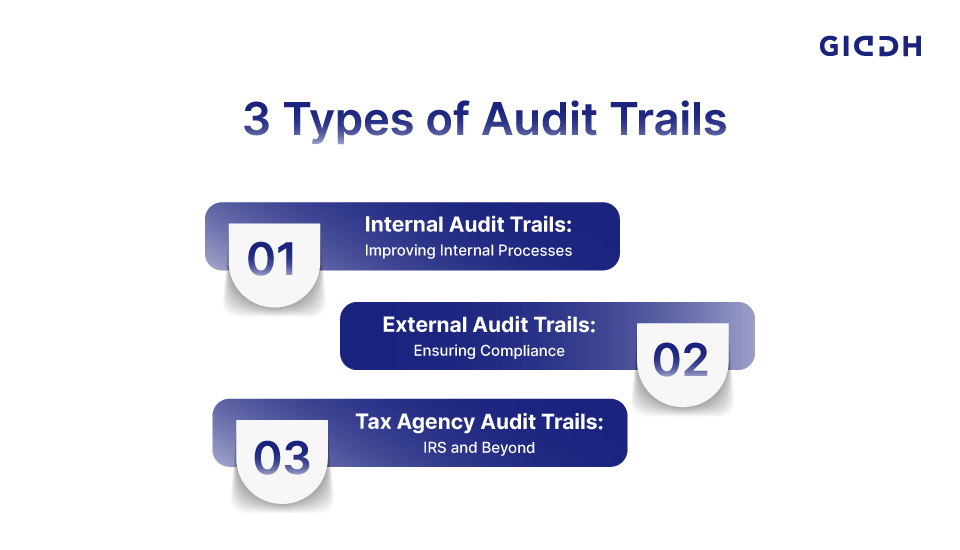
Audit trails take various forms, each serving a distinct purpose depending on the context and industry requirements. The three primary types of audit trails are internal, external, and tax agency audit trails.
Internal Audit Trails: Improving Internal Processes
Internal audit trails are used for internal reviews and process improvements. These trails focus on tracking activities such as:
-
Changes in workflows
-
Modifications to internal policies
-
Approvals and authorizations in financial systems
Internal audit trails help organizations identify inefficiencies and prepare for external audits by ensuring internal processes are optimized and compliant with industry standards.
Example: If a company identifies recurring errors in its general ledger, the audit trail provides evidence of how and when the changes were made, enabling the firm to address weaknesses in its internal controls.
External Audit Trails: Ensuring Compliance
External audit trails are focused on compliance with external regulations such as SOX and GAAP. They track changes to financial data and help ensure transparency during external auditors' reviews.
Example: When a company undergoes a year-end audit, external audit trails ensure that all transactions align with the reported financial statements. If discrepancies arise, audit trails provide evidence to address the issue.
Tax Agency Audit Trails: IRS and Beyond
Tax agency audit trails are used to verify GST tax filings and financial statements, particularly during audits by agencies such as the IRS. These trails document the entire history of transactions related to tax filings, including asset purchases, depreciation, and revenue recognition.
Example: During a tax audit, audit trails provide proof of asset depreciation, showing the complete record of asset purchases and depreciation postings, facilitating the process and ensuring accuracy.
Best Practices for Managing Audit Trails
Effective management of audit trails is essential for ensuring their usefulness in protecting data integrity and ensuring compliance. Here are key practices for managing audit trails effectively:
Ensuring Accuracy and Completeness
Ensure audit trails capture comprehensive, accurate information on every change. This includes:
-
Who made the change
-
What was changed
-
When it occurred
Regularly update audit trails to meet evolving audit trail requirements and industry standards.
Implementing Automated Monitoring
Leverage automated monitoring tools to track suspicious activity in real time. Automated tools can:
-
Detect unauthorized changes
-
Alert teams of potential security breaches
-
Ensure compliance with regulatory standards
Aligning Audit Trails with Compliance Frameworks
Audit trails must be aligned with compliance requirements like SOX, HIPAA, and GDPR. Ensure that the audit logs capture the necessary information for compliance audits, such as:
-
Financial transactions for SOX compliance
-
Data access logs for GDPR
-
Patient data access logs for HIPAA
Regular Audit Log Reviews
Even with automated online accounting tools in place, periodic reviews are essential. Manual reviews can help detect anomalies that might slip through the cracks, such as incorrect user permissions or suspicious data access.
Which Industries Need Audit Trail Software?
Healthcare
In healthcare, audit trail software is crucial for protecting patient data and ensuring HIPAA compliance. It tracks who accessed patient records, when, and for what purpose.
Finance
Financial institutions rely heavily on audit trails for compliance with SOX and GAAP. These trails help monitor financial transactions, prevent fraud, and ensure transparency in reporting.
Manufacturing
Manufacturers use audit trails to track production data, inventory management, and ensure compliance with industry standards such as ISO certifications.
Audit Trails in the Giddh Platform
Giddh’s audit trail software is built to track data changes in real-time, ensuring transparency, compliance, and data security across industries. It provides detailed logs that help detect fraud, maintain data integrity, and meet regulatory requirements.
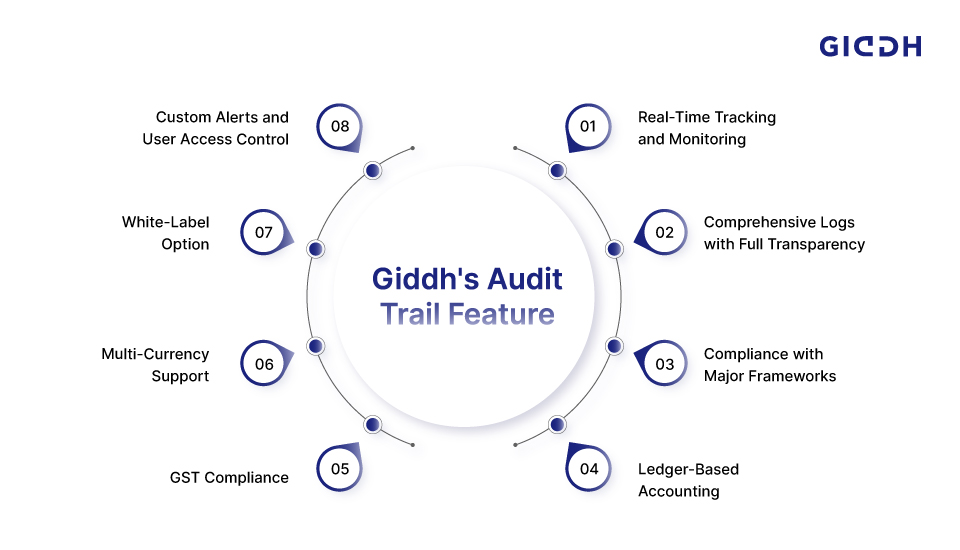
Key Features of Giddh’s Audit Trail Software
Real-Time Tracking and Monitoring
-
Captures every change as it happens
-
Instant alerts for unauthorized changes
-
Prevents fraud and data tampering
Comprehensive Logs with Full Transparency
-
Time-stamped entries linked to user IDs
-
Records affected data for full traceability
-
Ensures transparency and easy error detection
Compliance with Major Frameworks
-
Aligned with SOX, HIPAA, and GDPR
-
Helps avoid fines and penalties
-
Simplifies audits and compliance reporting
Ledger-Based Accounting
-
Tracks changes in general ledgers, revenue recognition, and asset purchases
-
Monitors accounts payable/receivable updates
-
Ensures accurate and compliant financial records
GST Compliance
-
Tracks GST-related transactions
-
Ensures adherence to local tax regulations
-
Simplifies tax reporting and compliance
Multi-Currency Support
-
Supports international transactions
-
Tracks currency conversions and foreign exchange activities
-
Offers comprehensive audit logs for global businesses
White-Label Option
-
Customizable branding to match company needs
-
Integrates seamlessly with business systems
-
Provides flexibility and a personalized experience
Custom Alerts and User Access Control
-
Customizable alerts for suspicious activities
-
Set user access permissions for critical data
-
Prevents unauthorized access and ensures data security

Final Thought
Audit trail software is indispensable for preventing silent data changes and ensuring the integrity of your organization’s data. It provides transparency, supports compliance efforts, and helps businesses meet regulatory standards.
Giddh’s audit trail software offers real-time tracking, compliance-aligned features, and customizable alerts, making it the ideal solution for businesses across various industries.
Contact us today to explore how Giddh can enhance your audit trail management and help maintain your compliance standards.
FAQ
How long should audit trails be retained?
Audit trails should be retained according to regulatory requirements, often ranging from 3 to 7 years, depending on industry standards.
Can audit trails be used in legal disputes?
Yes, audit trails provide a verifiable record of changes, which can be used as evidence in legal disputes.
What are the risks of not securing audit trails?
Failure to secure audit trails can result in undetected unauthorized changes, compliance violations, and data breaches.
Are audit trails only necessary for large organizations?
No, audit trails are crucial for any organization handling sensitive data, regardless of size, to ensure compliance and data integrity.
How can audit trails help prevent insider threats?
Audit trails help track user activity, making it easier to detect any unauthorized access or malicious modifications by internal users.
 Download
  Download