Barcode Scanning for Inventory Management as a Control System
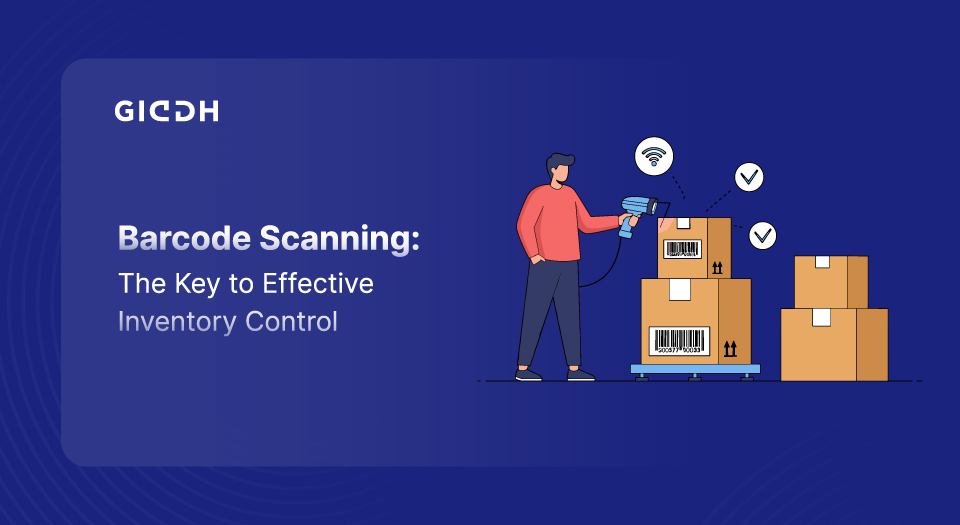
Inventory management is a crucial aspect of running a successful business. Did you know that, organizations that implement barcode inventory systems typically achieve accuracy rates of 99.9%, a significant improvement compared to manual systems, which often operate at 96% accuracy or lower.
This statistic underlines the growing importance of barcode scanning in businesses, especially as global supply chains become more complex. If you're still relying on outdated methods for tracking inventory or managing stock manually, you might be missing out on a significant opportunity to streamline your operations.
Barcode scanning for inventory management is transforming how businesses manage their stock by improving accuracy, minimizing errors, and providing real-time data that helps managers make more informed decisions.
In this blog post, we'll delve into the benefits of barcode scanning, explore its different types, and guide you through how to implement a barcode system for better inventory control.
Let’s break down how barcode scanning can enhance your business operations.
What is Barcode Scanning for Inventory Management?
Barcode scanning for inventory management is a technology that uses barcodes (either 1D or 2D) to track and manage products, assets, and inventory. These barcodes store data such as product names, serial numbers, prices, and other relevant information. The data stored in the barcode can then be read by a barcode scanner connected to an inventory management system, providing real-time tracking and updates.
The primary benefit of barcode scanning for inventory management is its accuracy and efficiency. Manual inventory management systems are prone to human errors, such as incorrect data entry or stock miscounting. Barcode scanning eliminates such errors by automatically inputting data into the system, reducing the likelihood of mistakes.
Key Benefits of Barcode Scanning for Inventory Management:
-
Real-time Tracking: Barcode systems enable businesses to monitor inventory in real time, providing managers with up-to-date stock information.
-
Reduced Errors: Automatic scanning and data entry minimize human errors in inventory management.
-
Better Visibility: Barcode systems provide complete visibility into the entire inventory process, helping businesses make more informed decisions.
-
Increased Efficiency: Barcode scanners can process items much faster than manual data entry, speeding up inventory management tasks.
What are the Basics of Barcode Scanning?
Barcode scanning systems use specialized scanners or barcode readers to interpret the data encoded in a barcode label. These systems usually consist of the following components:
-
Barcode Labels: These labels are attached to products or assets and contain encoded data, such as product ID, description, price, or stock level.
-
Barcode Scanner/Reader: This device scans barcode labels and translates the encoded information into readable data.
-
Inventory Management Software: Once the barcode is scanned, the information is fed into a centralized software system for real-time tracking and management.
Types of Barcodes: 1D vs 2D
The right combination of barcode hardware and software can significantly impact your inventory tracking efficiency. Barcode scanners come in two primary types: 1D and 2D.
While these barcodes may seem simple and uniform, their differences are substantial, and each type serves distinct purposes within inventory management systems. Below, we'll compare the two types of barcodes and their respective uses.
1D Barcodes
One-dimensional barcodes (1D) are the classic type of barcode most people are familiar with. They consist of a series of vertical lines and spaces, each varying in width. These barcodes encode data linearly, meaning the data is read from left to right. 1D barcodes are commonly used in retail, logistics, and for tracking individual items.
Types of 1D Barcodes Include:
-
UPC-E
-
EAN-13
-
Code 39
-
EAN 128
-
USPS IMB
-
UPC-A
-
RSS-14
-
Code 93
-
Interleaved 2 of 5
Key Features of 1D Barcodes:
-
Simple and easy to produce
-
Best for applications requiring minimal data, such as product ID and pricing
-
Typically used for product tracking, mail, and inventory control in retail
2D Barcodes
Two-dimensional barcodes (2D) offer a more advanced way to store data. Unlike 1D barcodes, 2D barcodes encode information in both horizontal and vertical dimensions, allowing them to store significantly more data.
They appear as square or rectangular patterns made up of pixels, dots, or geometric shapes. A widely used 2D barcode is the QR code, often seen in marketing, payments, and tracking applications.
Types of 2D Barcodes Include:
-
MaxiCode
-
Aztec
-
PDF417
-
QR Code
-
Data Matrix
Key Features of 2D Barcodes:
-
Can store large amounts of information, such as URLs, product details, and more
-
Smaller size with higher data storage capacity compared to 1D barcodes
-
Ideal for more complex applications like asset tracking, mobile payments, and detailed product information
Comparison Table: 1D vs 2D Barcodes
Feature | 1D Barcodes | 2D Barcodes |
|---|---|---|
Data Capacity | Stores limited data (e.g., product ID, price) | Stores more complex data (e.g., URLs, product details) |
Appearance | Vertical lines and spaces | Square or rectangular pixel patterns |
Size | Larger size for limited data | Smaller but stores more data |
Scan Method | Read horizontally | Read horizontally and vertically |
Common Uses | Retail, logistics, mail tracking | Mobile payments, tracking, asset management |
Scanning Equipment | Standard barcode scanners | Advanced barcode readers or smartphones |
Examples | UPC-A, EAN-13, Code 39 | QR Code, Data Matrix, PDF417 |
Durability | Prone to wear and damage | More resilient even if partially damaged |
How Does Barcode Scanning Help with Inventory Management?
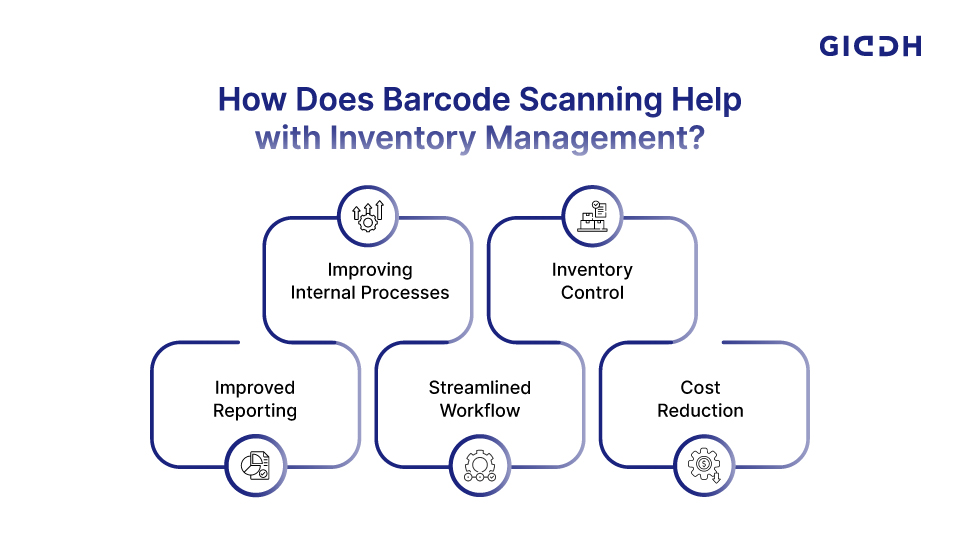
Barcode scanning offers several benefits that significantly improve inventory management. Here’s how it helps:
Efficiency and Accuracy
-
Faster Processing: Barcode scanners capture data quickly, enabling stock updates to occur much faster than in manual systems.
-
Reduced Errors: Eliminates human error by automatically capturing and entering data.
-
Real-Time Updates: Inventory data is updated instantly, ensuring accuracy and preventing stock discrepancies.
Inventory Control
-
Real-Time Tracking: Monitor stock levels across multiple locations in real time.
-
Accurate Stock Levels: Prevents overstocking or stockouts by ensuring inventory records are precise.
-
Better Replenishment: Accurate data enables timely reordering and accurate inventory forecasting.
Improved Reporting
-
Automated Reports: Generate real-time reports on inventory levels and product movements.
-
Data-Driven Decisions: Managers can make informed decisions based on accurate data.
-
Customizable Metrics: Reports can be tailored to track specific inventory categories or time periods.
Streamlined Workflow
-
Faster Stock Counts: Barcode scanning simplifies and speeds up stocktaking and cycle counting.
-
Efficient Order Fulfillment: Scanning ensures quicker, more accurate order picking and packing.
Cost Reduction
-
Reduced Labor Costs: Less manual input reduces labor expenses and time spent on inventory tasks.
-
Lower Inventory Loss: Minimizes theft and misplacement through real-time tracking and alerts.
How to Implement a Barcode Inventory Management System
Implementing a barcode-based inventory management system involves several steps. Here’s a step-by-step guide to help you integrate this technology into your business:
-
Assess Your Business Needs: Determine the types of products you manage, your inventory volume, and your warehouse size to identify the barcode system that best suits your business.
-
Choose the Right Barcode System: Decide between 1D or 2D barcodes based on your requirements. For example, if you need to store more detailed product information, 2D barcodes may be ideal.
-
Select Barcode Scanners: Choose barcode scanners or readers that are compatible with your inventory management software. Ensure they can read both 1D and 2D barcodes, if necessary.
-
Integrate with Inventory Management Software: Ensure your barcode system integrates seamlessly with your existing inventory or ERP system to enable real-time data synchronization.
-
Employee Training: Train employees on how to use the barcode scanning system to ensure smooth adoption and minimal disruption.
-
Continuous Monitoring: Regularly monitor the system to ensure it’s functioning efficiently and make any necessary adjustments.
Callout for Tool:
Giddh offers a comprehensive solution that integrates barcode scanning for inventory management, enabling businesses to track products in real time and generate reports effortlessly. With Giddh’s solution, you can automate your inventory control processes and increase operational efficiency.
How Giddh Can Fit Your Needs
Giddh’s cloud-based accounting platform simplifies and streamlines your business processes, including inventory management, invoicing, and more.
Giddh’s barcode scanning feature seamlessly integrates into your inventory management, offering real-time tracking and accurate stock management. Here’s how it helps:
-
Instantly updates inventory with accurate product details after scanning a barcode.
-
Automatically populates invoices and purchase bills, saving time and reducing errors.
-
Ensures up-to-date stock levels, preventing discrepancies.
-
Track inventory across multiple locations with ease.
-
Generate detailed reports on stock movements and performance.
-
Easily grow with your business by adding more users and features.
-
Simple, intuitive interface for seamless adoption.
Giddh’s barcode scanning feature automates inventory management, making it easier to track stock, generate reports, and maintain accuracy across locations.
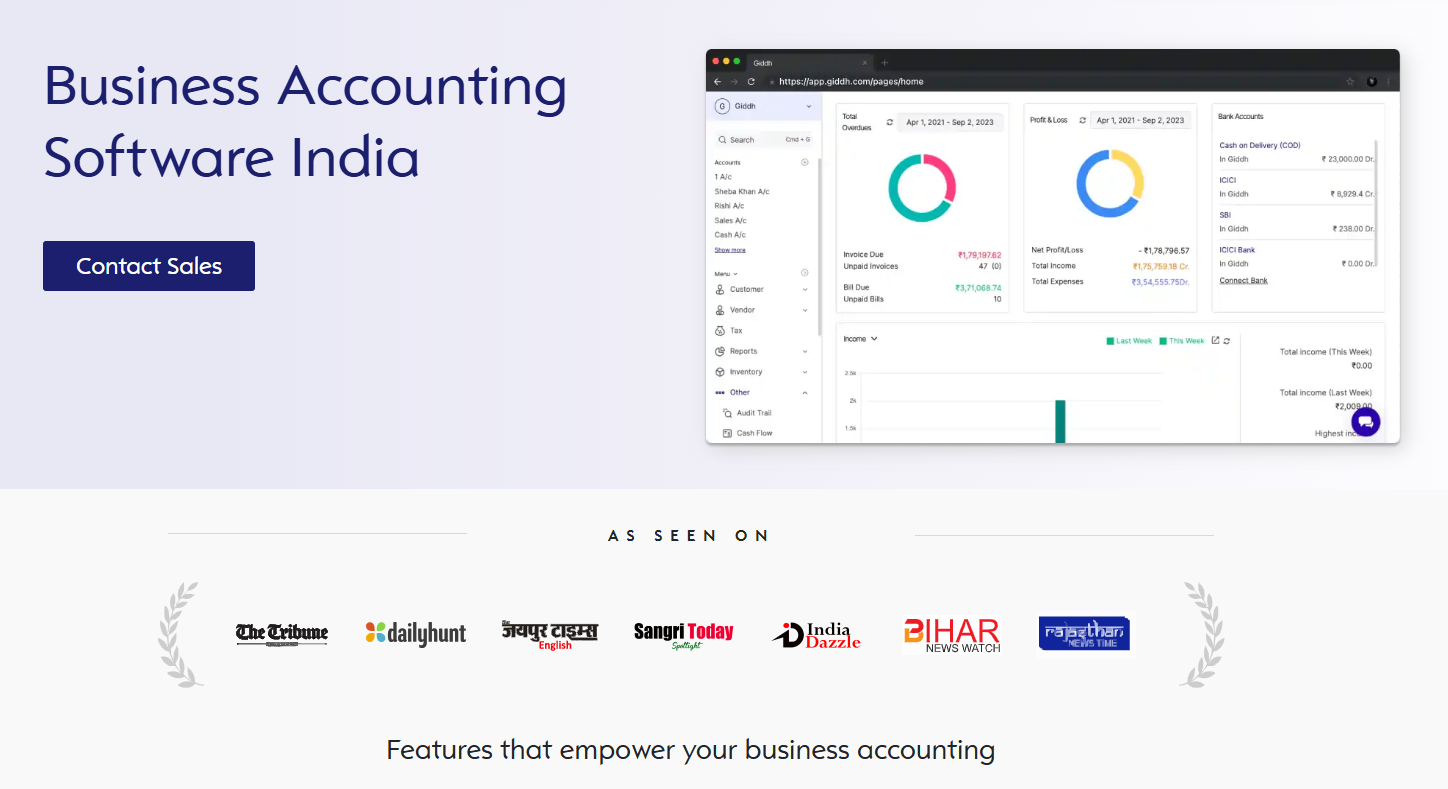
Here’s how Giddh can help your business:
Real-time Inventory Control
Giddh’s barcode-scanning feature enables businesses to track inventory in real time. By scanning a product’s barcode, all its details are automatically populated in invoices and purchase bills, reducing the risk of errors and ensuring up-to-date inventory records.
- Barcode scanning integration
- Track inventory in real time
- Automatic stock updates
- Reduced stock discrepancies
Powerful Reporting
With Giddh, you can generate detailed and customizable reports on inventory levels, product movements, and trends. These insights help businesses make better decisions by offering a clear overview of stock performance, allowing you to identify fast-moving items, optimize stock levels, and improve forecasting.
- Generate detailed reports
- Customizable insights
- Real-time data analysis
- Data-driven decision-making
Seamless Invoicing Solution
Giddh simplifies the invoicing process by automatically linking inventory details to invoices. Whether you're generating sales invoices or purchase bills, the system pulls real-time inventory data, making invoicing fast, accurate, and error-free.
- Automatic invoice population
- Fast invoice creation
- Link inventory with billing
- Minimized manual entry
Bank Reconciliation
Giddh's integrated bank reconciliation feature lets you easily match your bank statements with your business transactions, ensuring your financial records are accurate and up to date. This feature eliminates the need for manual reconciliation, saving time and reducing the risk of errors.
- Automated transaction matching
- Faster reconciliation process
- Eliminates manual work
- Quick discrepancy identification
GST Compliance
Giddh helps ensure that your business stays compliant with GST regulations. It automatically generates GST-compliant invoices and provides real-time tax calculations and reports, simplifying tax filing and helping you stay compliant with the latest tax laws.
- GST-compliant invoices
- Real-time tax calculation
- Simplified tax filing
- Automatic regulation updates
Multi-Currency Support
For businesses operating internationally, Giddh offers multi-currency support. You can handle transactions in different currencies, automatically convert them to your base currency, and track exchange rate fluctuations. This feature is ideal for businesses that deal with global clients and suppliers.
- Handle global transactions
- Automatic currency conversion
- Track exchange rates
- Manage international pricing
Unlimited User Access
Giddh allows for unlimited user access, making it easier for teams to collaborate. With customizable permissions, you can control who has access to specific data and features, ensuring the right people have the right access to streamline operations and protect sensitive information.
- Collaborative access
- Customizable user permissions
- Improved team workflow
- Easy user management
Scalable Solution
Giddh is designed to grow with your business. Whether you're a small startup or a large enterprise, Giddh’s inventory management system can scale to meet your evolving needs. As your business expands, you can easily add new users, locations, or warehouses, ensuring that your system always aligns with your operational requirements.
- Adapt to business growth
- Multiple warehouse management
- Flexible user expansion
- Scalable features and tools

Final Thought:
Barcode scanning is no longer just a convenience—it's a necessity for businesses that want to maintain accurate, efficient, and real-time control over their inventory. Implementing a barcode inventory management system can significantly reduce errors, streamline operations, and provide better insight into your stock levels. By leveraging tools like Giddh’s cloud-based solution, businesses can integrate barcode scanning effortlessly and optimize their entire inventory management process.
If you're ready to enhance your inventory management, discover how barcode scanning can help your business streamline operations and improve efficiency today. Get started with Giddh now.
FAQs
- What type of barcode is used for inventory?
The most common barcodes used for inventory are 1D barcodes, such as UPC and EAN codes. However, 2D barcodes like QR codes are becoming more popular for their ability to store more data.
- What are the maintenance requirements for a barcode inventory system?
Barcode systems require minimal maintenance, but regular checks on barcode scanners and software updates are necessary. It’s important to replace damaged barcode labels to ensure consistent scanning.
- How do 1D and 2D barcodes differ?
1D barcodes store data in a series of vertical lines, whereas 2D barcodes can store data both horizontally and vertically. 2D barcodes offer higher data capacity and can be more resilient to damage.
- How do barcodes help with inventory control?
Barcodes enable businesses to track inventory in real-time, reduce manual errors, and provide accurate stock updates. They also facilitate quicker stock counts and improved reporting, contributing to better inventory control.
 Download
  Download