Revenue Ledger vs. General Ledger: Key Differences Explained
Managing finances in a growing business can be tricky. Did you know that nearly 60% of small businesses struggle with cash flow management due to errors in financial reporting? Tracking income from various sources, along with expenses, can lead to confusion without the right systems in place.
Many small and medium-sized businesses (SMBs) face challenges in distinguishing between key accounting terms, especially when it comes to the revenue ledger and the general ledger.
Why should you care? By correctly understanding and managing these two critical ledgers, you can ensure more accurate financial reporting and streamline your financial processes.
In this blog, we’ll break down the differences between a revenue ledger and a general ledger, and explain why mastering both is essential for accurate financial management. We’ll also explore how tools like Giddh can help simplify your ledger management.
What is a Revenue Ledger?
A revenue ledger is a specialized financial document that tracks only a business's revenue or income. Unlike other ledgers, which include a wide range of financial data, the revenue ledger specifically records the transactions related to the inflow of money from products or services sold. This allows businesses to monitor their earnings accurately and ensures that all income is correctly accounted for.
By separating revenue from other financial activities, companies can more effectively track their performance in generating income. This focused approach helps avoid confusion between various streams of income and other financial transactions.
How It Fits into Accounting Systems
The revenue ledger is an integral part of the broader ledger accounting system. It works in tandem with the general ledger (which tracks all financial transactions) to provide a more focused overview of a business's income. The revenue ledger ensures that income-related data is separated and categorized, allowing for more detailed financial reporting.
A revenue ledger is typically used to record different sources of income, such as product sales, service fees, and other revenue-generating activities, offering clarity and reducing manual tracking errors.
Importance of Financial Management
For businesses managing multiple revenue streams, having a dedicated revenue ledger can prevent financial reporting errors. It makes the job easier for CFOs and accountants by providing an organized, accurate record of all incoming revenue. This ensures that income figures remain clear and easy to track, especially when reconciling accounts at the end of each period.
What is a General Ledger?
The general ledger is the backbone of any accounting system, serving as the central repository for all financial transactions. It includes a comprehensive record of assets, liabilities, equity, revenues, and expenses. Unlike the revenue ledger, which tracks income alone, the general ledger records a broader scope of financial activities, providing a complete financial picture of the business.
This detailed ledger is essential for generating key financial statements, such as the balance sheet and income statement, which provide a comprehensive overview of a company's financial health. Every transaction—whether it's a sale, purchase, expense, or asset acquisition—has an entry in the general ledger.
Key Components
The general ledger accounts list includes various accounts, each representing a different type of transaction. These accounts typically include:
-
Assets: Cash, accounts receivable, inventory
-
Liabilities: Accounts payable, loans, accrued expenses
-
Equity: Owner’s equity, retained earnings
-
Revenue: Sales income, service revenue (tracked in the revenue ledger)
-
Expenses: Cost of goods sold, operational expenses
Each account is updated through journal entries that debit or credit specific amounts, ensuring the accuracy of all business transactions.
Role in Financial Reporting
The general ledger plays a key role in generating comprehensive financial reports, such as the balance sheet, profit and loss (P&L) statement, and cash flow statement. These reports help businesses assess their financial position, make informed decisions, and provide transparency to stakeholders.
How It Differs from the Revenue Ledger
The significant difference between the revenue ledger and the general ledger lies in the scope of their coverage:
-
Revenue Ledger: Focuses only on income generated by the business.
-
General Ledger: Includes all financial activities, such as expenses, assets, liabilities, and equity, along with revenue.
While the revenue ledger provides a snapshot of how much money is coming into the business, the general ledger gives a more holistic view of the company's financial health.
Key Differences Between Revenue Ledger and General Ledger
Feature | Revenue Ledger | General Ledger |
|---|---|---|
Focus Area | Tracks only income / revenue | Tracks all financial transactions (income, expenses, assets, etc.) |
Level of Detail | Focused, detailed records of income sources | Broad and comprehensive, covering all financial aspects |
Use in Financial Reporting | Provides accurate income figures | Used to prepare complete financial statements like P&L, balance sheet, and cash flow |
Integration in Accounting Systems | Part of the larger ledger accounting system | Central component of the accounting system, integrated with all financial records |
Why It’s Crucial to Keep These Ledgers Separate
-
Accuracy in Financial Reporting: Separating revenue from other financial transactions ensures that income is tracked separately, reducing the risk of errors.
-
Simplified Reconciliation: When revenue and other financial data are clearly distinguished, it becomes easier to reconcile accounts, especially in businesses with multiple revenue streams.
-
Enhanced Financial Insights: By keeping the revenue ledger separate from the general ledger, businesses can gain clearer insights into their income sources and overall financial health.
How Technology Helps in Managing Revenue and General Ledgers
Accounting software tools, like Giddh, simplify the process of managing both the revenue ledger and general ledger. These tools offer automated features, such as:
-
Automatic Data Entry: Reduces manual errors and speeds up transaction recording.
-
Real-Time Reporting: Provides up-to-date insights into your financial status, allowing for timely decision-making.
-
Error Detection: Flags potential discrepancies, ensuring accuracy in both ledgers.
-
Seamless Integration: Integrates the revenue and general ledgers, making it easier to manage and reconcile accounts.
For SMBs, using modern tools like Giddh can save time and effort, improving the accuracy and efficiency of financial reporting. These tools also reduce the burden of manual data entry, ensuring that both ledgers remain accurate and up to date.
How Giddh Simplifies Ledger-Based Accounting
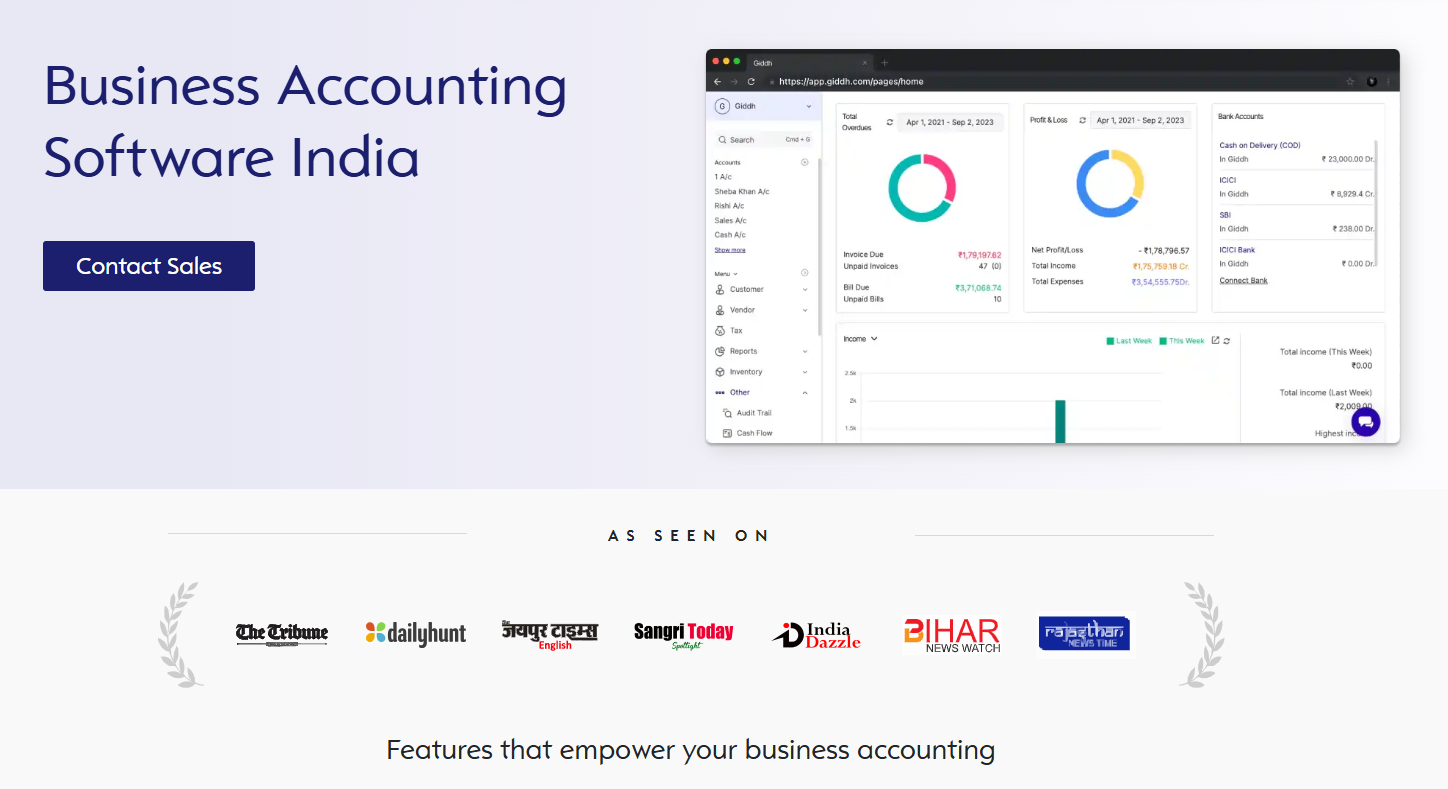
Managing multiple ledgers manually can be a daunting task for businesses, especially those with growing revenue streams. One of the most efficient ways to streamline financial processes is by using the best accounting system that integrates ledger-based accounting. This is where Giddh comes in, offering an intuitive and efficient solution that simplifies both revenue ledger and general ledger management.
Giddh’s Unique Selling Point: Ledger-Based Accounting
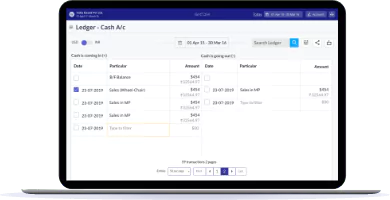
Giddh provides a ledger-based accounting system, which means that all of your financial transactions—whether income, expenses, or other activities—are organized and managed in separate, easy-to-navigate ledgers. This offers several advantages:
Clear Separation of Income and Expenses
With Giddh’s ledger-based approach, your revenue ledger and general ledger are seamlessly managed within the same system but kept distinct for clarity. This separation ensures that your income is tracked without mixing it up with operational expenses or other financial data, reducing errors and improving the accuracy of your financial reports.
-
Prevents errors in reporting by ensuring revenue data isn’t confused with operational expenses.
-
Improves financial accuracy by clearly distinguishing income from other financial entries.
-
Reduces manual errors as each ledger serves a specific purpose, making data easier to categorize and track.
Real-Time Updates and Automation
Giddh's automated accounting software keeps your ledgers up to date in real-time. This reduces the need for manual entry and ensures that both general ledger accounts and revenue ledgers reflect the multiple current financial data. The automated nature of Giddh helps minimize human errors and ensures that your reports are always accurate.
-
Automated data entry reduces time spent on manual tasks and minimizes mistakes.
-
Real-time synchronization means your financial data is always up to date.
-
Enhances accuracy by automatically updating all ledger entries, ensuring error-free financial tracking.
Simplified Financial Reporting
Whether you're preparing a profit and loss statement, a balance sheet, or other financial reports, Giddh’s ledger-based accounting system makes the process smoother. The system compiles data from your revenue ledger and general ledger, generating comprehensive and accurate financial statements with just a few clicks.
-
Instant report generation for P&L, balance sheets, and cash flow statements.
-
Customizable report options allow you to focus on specific revenue streams or financial metrics.
-
Faster decision-making by providing up-to-date financial data at your fingertips.
Tailored for SMBs and Growing Businesses
Small to medium-sized businesses (SMBs), which often manage multiple revenue streams, benefit from Giddh’s ability to maintain organized, precise records in both the revenue ledger and the general ledger. By using Giddh, businesses can automate their accounting, reduce manual effort, and focus more on strategic growth.
-
Designed for growing businesses with features tailored to managing multiple income sources.
-
Simplifies complex accounting tasks, helping you maintain clarity in your ledgers even as your business scales.
-
Reduces manual work, allowing businesses to allocate more resources towards growth and strategy.
Integrated Bank Reconciliation
One of the standout features of Giddh is its integrated bank reconciliation, which automatically matches your ledger entries against bank statements. This ensures that your records are accurate and prevents discrepancies, offering you peace of mind during audits or financial reviews.
-
Automatic matching of ledger entries to bank statements eliminates discrepancies.
-
Real-time reconciliation means you always have a clear picture of your cash flow.
-
Audit-friendly with accurate, up-to-date bank reconciliation reports.
How Giddh Helps Manage Revenue and General Ledgers
Ledger Accounting in Tally Integration
If your business already uses tools like Tally for accounting, Giddh makes it easy to integrate with these systems, enhancing the automation and accuracy of your ledger management. This integration ensures that you can track both revenue and overall financial transactions without duplicating efforts.
-
Seamless integration with Tally, providing enhanced automation.
-
Eliminates duplication by syncing your existing Tally records with Giddh’s ledger system.
-
Unified reporting that pulls data from both systems for comprehensive financial insights.
Streamlined Tax Compliance
With the tax modules built into Giddh, businesses can generate GST-compliant reports directly from their general ledger accounts list. This reduces the stress of tax season and ensures that all financial records are correctly formatted for filing.
-
GST-compliant reports generated directly from your ledgers, ensuring tax compliance.
-
Simplifies tax filing with pre-formatted, error-free reports.
-
Time-saving feature that eliminates the need for manual tax calculations or formatting.
Customizable Reports
Businesses can create custom financial reports by selecting specific ledgers, giving them a more granular view of their finances. For example, you can generate reports based on revenue streams or other key financial data, helping you make informed decisions quickly.
-
Tailor-made reports that cater to specific business needs or financial goals.
-
Flexible reporting options allow you to focus on revenue sources or any other key data.
-
Quick access to insights that support more intelligent, data-driven business decisions.

Conclusion
Understanding the differences between the revenue ledger and the general ledger is crucial for businesses looking to maintain accurate financial records. By keeping these ledgers separate, businesses can reduce errors, simplify reconciliation, and gain deeper insights into their financial health. With modern tools like Giddh, managing both ledgers has never been easier, helping SMBs optimize their financial management practices.
Ready to streamline your financial reporting? Start a free trial today to master revenue and general ledger management!
FAQs
1. What’s the difference between a revenue ledger and a general ledger?
A revenue ledger tracks only income, whereas a general ledger records all financial transactions, including revenue, expenses, and liabilities.
2. How do I manage revenue and general ledgers in Tally?
In Tally, the revenue ledger records income transactions, while the general ledger records all other financial transactions. You can categorize each transaction into the appropriate ledger for accurate reporting.
3. Can Giddh help with ledger reconciliation?
Yes, Giddh automates the process of reconciling both revenue and general ledgers, making it easier to ensure accuracy and reduce manual errors.
 Download
  Download