Day Books in Accounting as the First Line of Financial Control

It is estimated that small businesses have experienced an increase in financial errors over the past five years, primarily due to inefficient financial tracking systems. Inaccurate bookkeeping can lead to missed tax deductions, cash flow issues, and even legal complications.
For many businesses, poor financial control can be the difference between success and failure. Are you still relying on manual tracking for your company’s finances? If you are, you might be overlooking a crucial tool that can prevent costly errors—day books in accounting.
By understanding the role day books play in your business, you can take the first step toward achieving greater financial accuracy and control. Day books offer a systematic approach to recording transactions, helping small business owners ensure their financial records are reliable and easily accessible.
Let’s dive into how this fundamental accounting tool can streamline your operations and pave the way for better decision-making.
What Are Day Books in Accounting?
Day books in accounting are a foundational tool in any business’s financial system. They serve as the first line of record-keeping for transactions, making them essential for tracking the flow of money.
By using day books, businesses can record daily financial activities such as sales, purchases, and cash receipts. These books serve as a chronological log that provides a transparent and detailed account of all business transactions.
Types of Day Books
-
Sales Day Book: Records all sales made by the business on credit.
-
Purchase Day Book: Tracks all purchases made on credit.
-
Cash Book: Keeps a record of all cash transactions.
-
Journal: A more comprehensive book used for recording financial activities not captured in other day books.
For small businesses, these records are essential for maintaining clarity and transparency, especially when preparing financial statements such as balance sheets and profit & loss statements. In essence, day books act as the backbone of your accounting system, ensuring that financial information is organized, accessible, and accurate.
Importance of Day Books as the First Line of Financial Control
Control and Accuracy: One of the primary reasons day books are crucial is that they help businesses maintain control over their financial data. Day books ensure that every transaction is recorded and categorized, reducing the likelihood of errors and inaccuracies. By following a consistent recording format, businesses can easily verify their records and identify discrepancies early on.
Prevention of Financial Mistakes: Without accurate and up-to-date records, businesses can miss crucial financial opportunities, such as tax deductions or early payment discounts. A well-maintained daybook system minimizes errors and ensures all financial transactions are captured correctly, reducing the risk of missing out on these benefits.
Data Organization and Clarity: Day books offer a structured way to organize financial transactions, making it easier to understand the business’s financial health. Organized data also enables better forecasting, planning, and decision-making.
By analyzing day book entries, small business owners can gain deeper insights into cash flow, profitability, and expenses.
Key Features of Day Books in Accounting
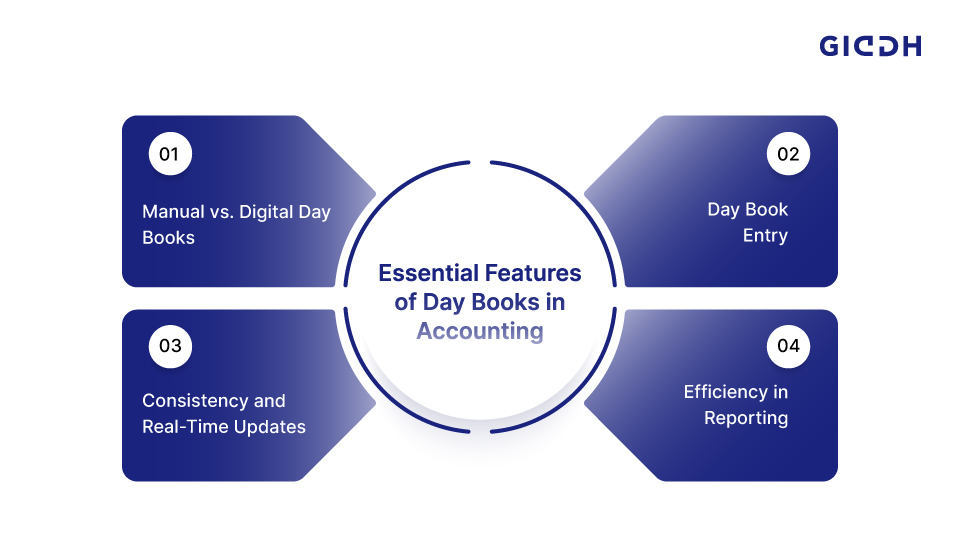
Day books include features that enhance financial accuracy and control. Here's how they can be a game-changer for businesses:
Manual vs. Digital Day Books
While traditional day book format manual accounting involves recording transactions by hand, modern businesses are increasingly turning to digital solutions. Digital day books automate the recording process, minimizing the risk of human error.
Platforms like Giddh.com offer cloud-based accounting software that can seamlessly manage day book entries, automating tasks such as transaction categorization and data syncing.
Day Book Entry
A day book entry typically includes the date, description of the transaction, debit and credit amounts, and the balance after each transaction. This simple yet effective format helps accountants track financial activity daily, ensuring all transactions are documented and accounted for.
Consistency and Real-Time Updates
Whether manual or digital, maintaining consistency in day book entries is essential. A day book that is consistently updated ensures that real-time data is always available for reporting and analysis. This leads to better financial decision-making and prevents errors due to outdated information.
Efficiency in Reporting
Since day books provide a chronological record of all transactions, they enable businesses to quickly generate reports such as income statements, cash flow statements, and balance sheets. The ease of reporting is one of the key benefits of maintaining a thorough day book system.
Format of Day Book in Accounting: Best Practices for Success
The format of day book in accounting can vary depending on the type of business and the nature of transactions, but a standard day book format includes:
-
Date: The date of the transaction.
-
Description: A brief description of the transaction.
-
Debit/Credit Amount: The amounts for each transaction.
-
Balance: The balance after each entry.
Examples of Day Book Entries
-
Example 1: A sale transaction on credit:
-
Date: 01/10/2026
-
Description: Sale to Customer X
-
Debit: $500
-
Credit: $500
-
Balance: $500
-
-
Example 2: A purchase transaction on credit:
-
Date: 02/10/2026
-
Description: Purchase from Supplier Y
-
Debit: $300
-
Credit: $300
-
Balance: $200
-
Standardizing these entries ensures easy tracking and auditing.
Day Books vs Other Financial Controls
While day books are an essential tool in financial control, they are just one part of a larger financial system. Here's how day books compare to other key financial controls:
-
Journals: Unlike day books, journals are used for recording less frequent transactions. They are often used to consolidate entries made in the day books before they are transferred to ledgers.
-
Ledgers: Ledgers provide a more detailed breakdown of accounts. They summarize the transactions recorded in the day books and journals into specific accounts, making it easier to prepare financial statements.
Despite these distinctions, day books remain the first step in building a solid financial record and bookkeeping accounting system. They ensure that all transactions are initially captured, which later feeds into more complex accounting systems.
Challenges with Day Books and How to Overcome Them
While day books offer numerous benefits, businesses often face challenges when using them, especially when done manually. Here are some common challenges:
Common Challenges
-
Manual Errors: Writing errors, transposed numbers, and missed entries are common in manual day books.
-
Time-Consuming: Maintaining a manual day book can be time-consuming and prone to human oversight.
Tips for Overcoming Challenges
-
Regular Reconciliation: Schedule regular checks to reconcile day books with bank statements and other financial records.
-
Leverage Accounting Software: Switch to digital accounting solutions to automate data entry and reduce the risk of errors.
How Giddh Helps
Giddh simplifies day book management by automating data entry, reducing human error, and streamlining financial reporting.

Why You Should Invest in Digital Solutions for Day Books
Switching from manual day books to digital solutions offers several advantages:
-
Time and Resource Savings: Digital accounting systems automate data entry, saving time and reducing resource consumption.
-
Real-Time Access: With digital systems, day books are updated in real-time, allowing businesses to track transactions as they occur.
-
Integration with Other Financial Tools: Digital day books can easily integrate with invoicing, payroll, and tax reporting tools, offering a comprehensive view of financial health.
Whether you're looking for detailed financial reporting or seamless integration with other financial tools, knowing your business's needs can help you make the right choice.
Check out this comprehensive guide on how to choose the best financial reporting software.
Conclusion
Day books in accounting play a vital role in establishing financial control and ensuring accuracy in record-keeping. By implementing day books correctly, small businesses can reduce errors, enhance decision-making, and maintain better financial transparency. Whether you use manual day books or invest in digital solutions, having a well-organized record-keeping system is essential for business success.
If you're ready to simplify your financial management and improve accuracy, contact us for a free consultation and discover how Giddh can help streamline your accounting processes.
FAQ
1. What is a day book in accounting?
A day book in accounting is a chronological record of financial transactions that a business engages in daily, such as sales, purchases, and cash transactions.
2. Why are day books important for small businesses?
Day books provide an organized, reliable, and transparent record of all financial transactions, making it easier for small businesses to track their finances and avoid costly errors.
3. How can I standardize my day book entries?
Standardizing entries involves creating a consistent format for all transactions, including columns for date, description, debit/credit amounts, and balance. Using accounting software like Giddh.com can automate this process.
4. Can I use day books for real-time financial reporting?
Yes, day books, especially when managed digitally, offer real-time updates that can be accessed anytime, ensuring accurate financial reporting and decision-making.
 Download
  Download