Multi-User Billing Software for Multi-Branch Firms: Streamlining Operations
Recent studies show that over 60% of small- to mid-sized businesses still use manual methods, such as spreadsheets, for financial reporting and invoicing, leading to significant inefficiencies. For growing firms with multiple branches, this reliance on manual systems can cause delays, errors, and a lack of real-time visibility into financial data. Are you one of the many businesses stuck in this cycle? It’s time to consider a change.
Multi-user billing software is designed to automate and simplify billing across multiple locations, allowing businesses to scale without the added complexity. By centralizing financial operations, this software eliminates manual entry, reduces errors, ensures timely reporting, and keeps operations efficient. In this blog, we will explore the critical benefits and features of multi-user billing software, why your business needs it, and how it can help you save time and costs.
What is Multi-User Billing Software?
Multi-user accounting software is a tool designed to handle billing and invoicing tasks across multiple users, departments, or branches. It ensures that billing information from different locations is integrated, reducing repetitive data entry and enabling finance teams to manage transactions more efficiently.
This software helps businesses automate billing, streamline invoicing, and centralize financial data. It is especially valuable for firms with multiple locations or branches that require real-time updates, consistency in data, and fast access to financial information.
Why It Matters
For mid-sized firms that operate in multiple locations, managing billing without an integrated system can be chaotic. Businesses may face inefficiencies, such as data entry errors, delayed reports, or difficulty in consolidating information from different branches. This is where multi-user billing software shines, as it automates and centralizes billing, leading to:
-
Seamless integration across branches
-
Real-time visibility into financial data
-
Reduced risk of errors and inconsistencies
By automating the billing process, companies can focus on what matters most—growing their business without worrying about administrative tasks.
Benefits for Multi-Branch Firms
-
Seamless Integration Across Branches: All branches are synchronized, so there’s no need to manually consolidate data from each location.
-
Centralized Financial Data: Keep all financial information in one place for easier management and reporting.
-
Real-Time Visibility: Gain instant insights into your financial standing, no matter where your branches are located.
-
Reduced Errors: Automation reduces human error and inconsistencies in data entry.
Key Features of the Best Multi-User Billing Software
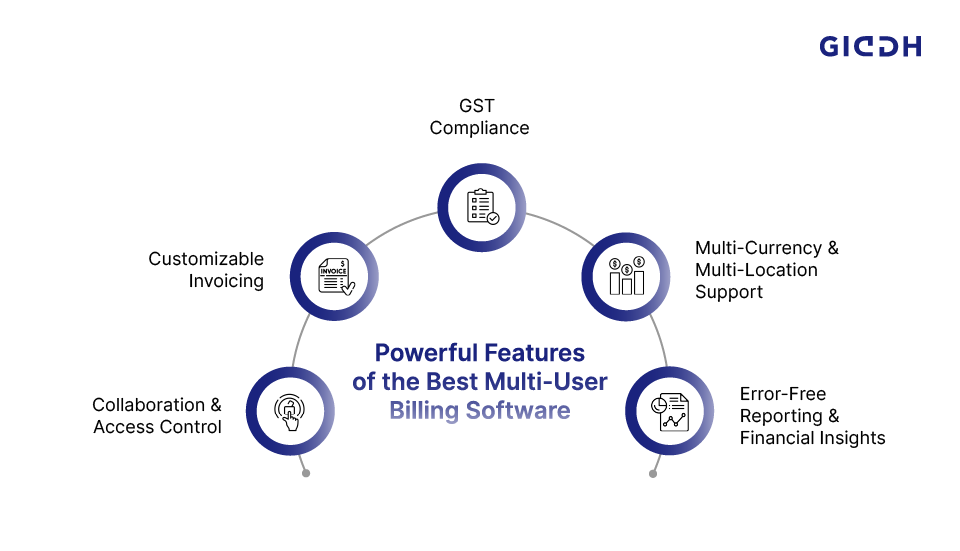
Collaboration & Access Control
One of the most significant advantages of multi-user billing software is that it enables multiple users to collaborate in real time. Each branch or department can have tailored access permissions, ensuring sensitive data is protected while still enabling employees to view and edit relevant information.
Customizable Invoicing
Not every branch or client needs the same billing structure. The best billing software allows businesses to customize invoices based on region, service, or client type. This flexibility ensures that every client receives the correct invoice format, while branches adhere to local rules and requirements.
GST Compliance
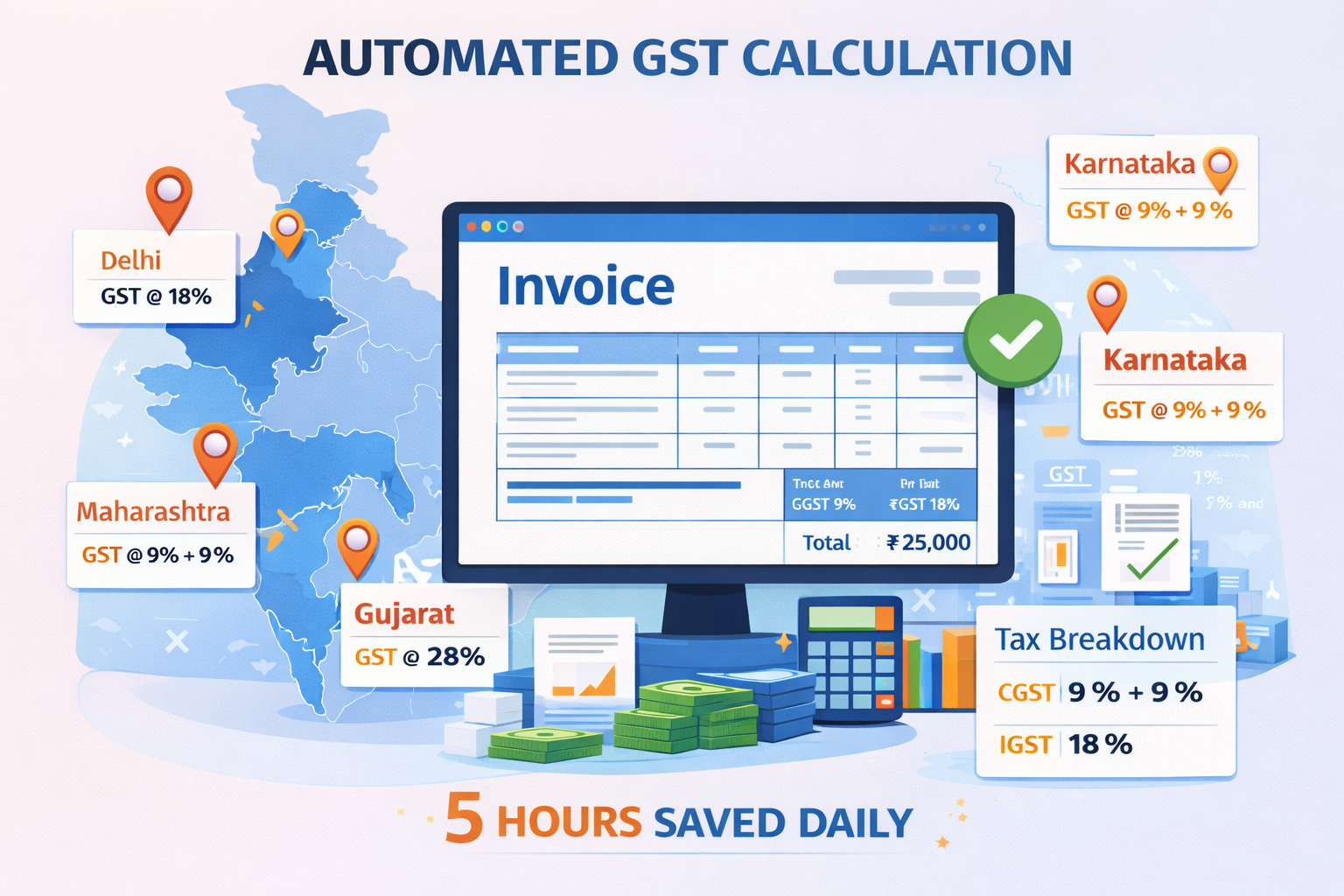
For businesses operating in India, GST compliance is essential. The top billing software solutions automatically integrate GST rates into invoices, ensuring that tax compliance is always up to date and error-free. This feature streamlines tax filing and reduces the chance of costly mistakes.
Multi-Currency & Multi-Location Support
Managing branches in different countries can add complexity, especially when dealing with multiple currencies. The best multi-user billing software offers multi currency support, allowing businesses to manage financial data in different currencies with ease, making it simpler to operate across borders.
Error-Free Reporting & Financial Insights
Automated systems significantly reduce human errors in financial reporting. By centralizing data and automating processes, businesses gain accurate, real-time reports and financial insights. This enables quick decision-making and ensures financial accuracy across all locations.
How Multi-User Billing Software Solves Common Problems for Growing Firms
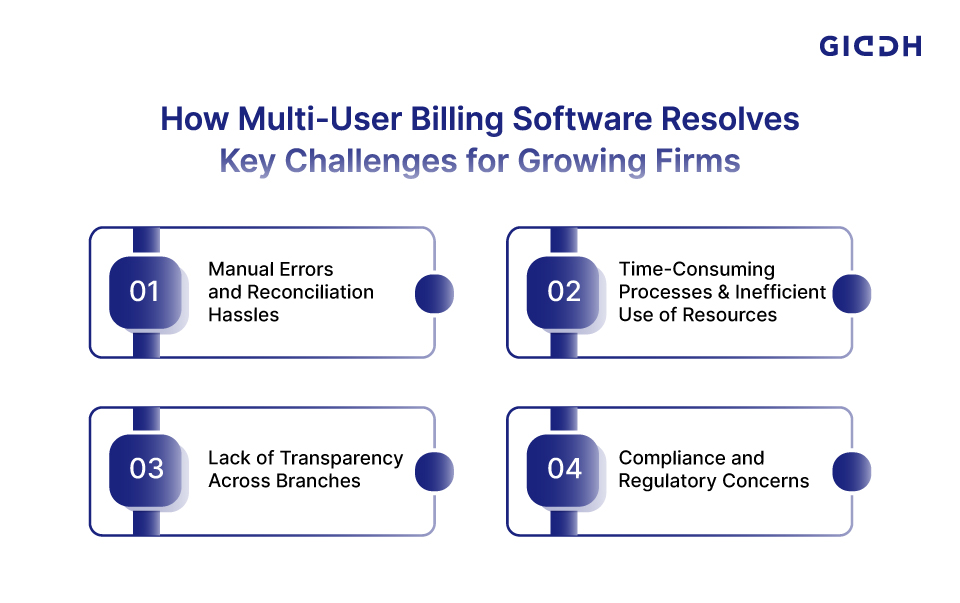
Running a growing business with multiple branches brings its own set of challenges, particularly in managing financial reporting data. Manual processes often lead to inefficiencies, errors, and frustration among finance teams. This section delves into some of the most common problems faced by multi-branch firms and explains how multi-user billing software can resolve them.
Manual Errors and Reconciliation Hassles

Pain Points:
Manual data entry is a known source of errors in financial reporting. When using spreadsheets or paper-based systems, human mistakes—such as incorrect data entry, calculation errors, or outdated information—are common.
These errors often lead to discrepancies in financial statements and delayed reports. Furthermore, manually reconciling data across branches can be time-consuming, leading to missed deadlines or incorrect data being used in decision-making.
Solution:
Automated billing software helps eliminate these manual errors by syncing data across all branches in real time. With each update reflected instantly, businesses no longer need to worry about discrepancies across locations. The automated system ensures that financial data is accurate and up to date, reducing the risk of errors and improving overall reporting speed.
- Example: Imagine a scenario where a retail business operates across multiple locations. Using traditional methods, they encounter errors in inventory data, leading to incorrect billing and revenue reporting.
By switching to multi-user billing software like Giddh, the company can automatically sync sales data across all branches, ensuring every transaction is recorded accurately and preventing mistakes that could affect financial reports.
Time-Consuming Processes & Inefficient Use of Resources
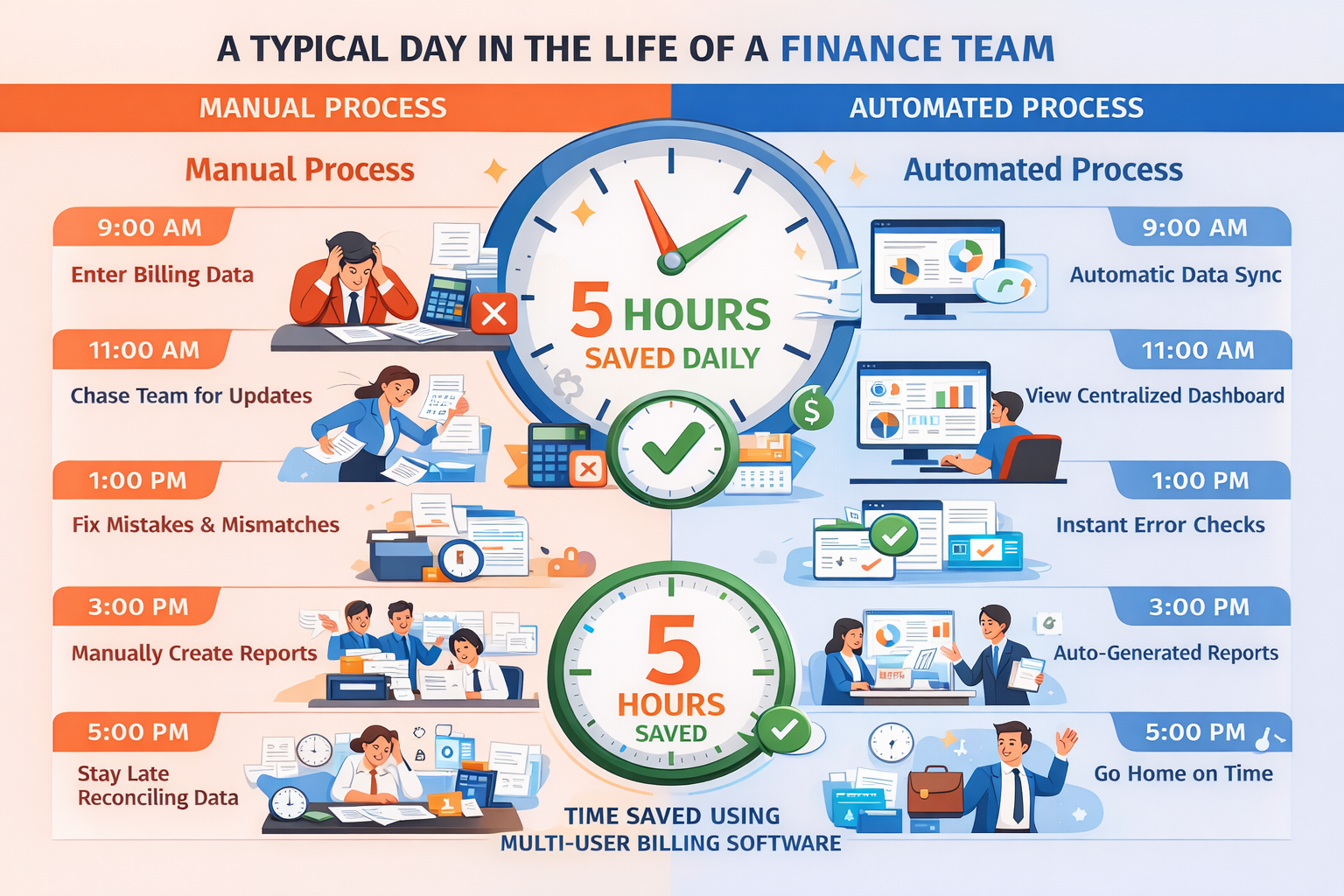
Pain Points:
Finance teams often spend hours manually updating records, entering invoices, and consolidating data from multiple branches. This not only leads to inefficiency but also causes employee burnout.
As a result, finance teams are unable to focus on higher-value activities like strategic decision-making and financial forecasting. The time spent on these repetitive administrative tasks could be better utilized for more important tasks, such as analyzing business performance and planning for growth.
Solution:
Multi-user billing software streamlines administrative processes by automating repetitive tasks like invoicing, expense tracking, and financial reporting.
With automation handling most of the data entry, teams can focus on more strategic and value-adding activities. The time saved can be used for deeper financial analysis, which contributes to better decision-making and business growth.
- Example: A mid-sized chain of restaurants is manually generating invoices and updating spreadsheets for each branch. With multiple locations, the process is tedious and inefficient. By adopting multi-user billing software, the business automates invoice generation and financial data syncing, saving hours each week and enabling the finance team to focus on strategy.
Lack of Transparency Across Branches
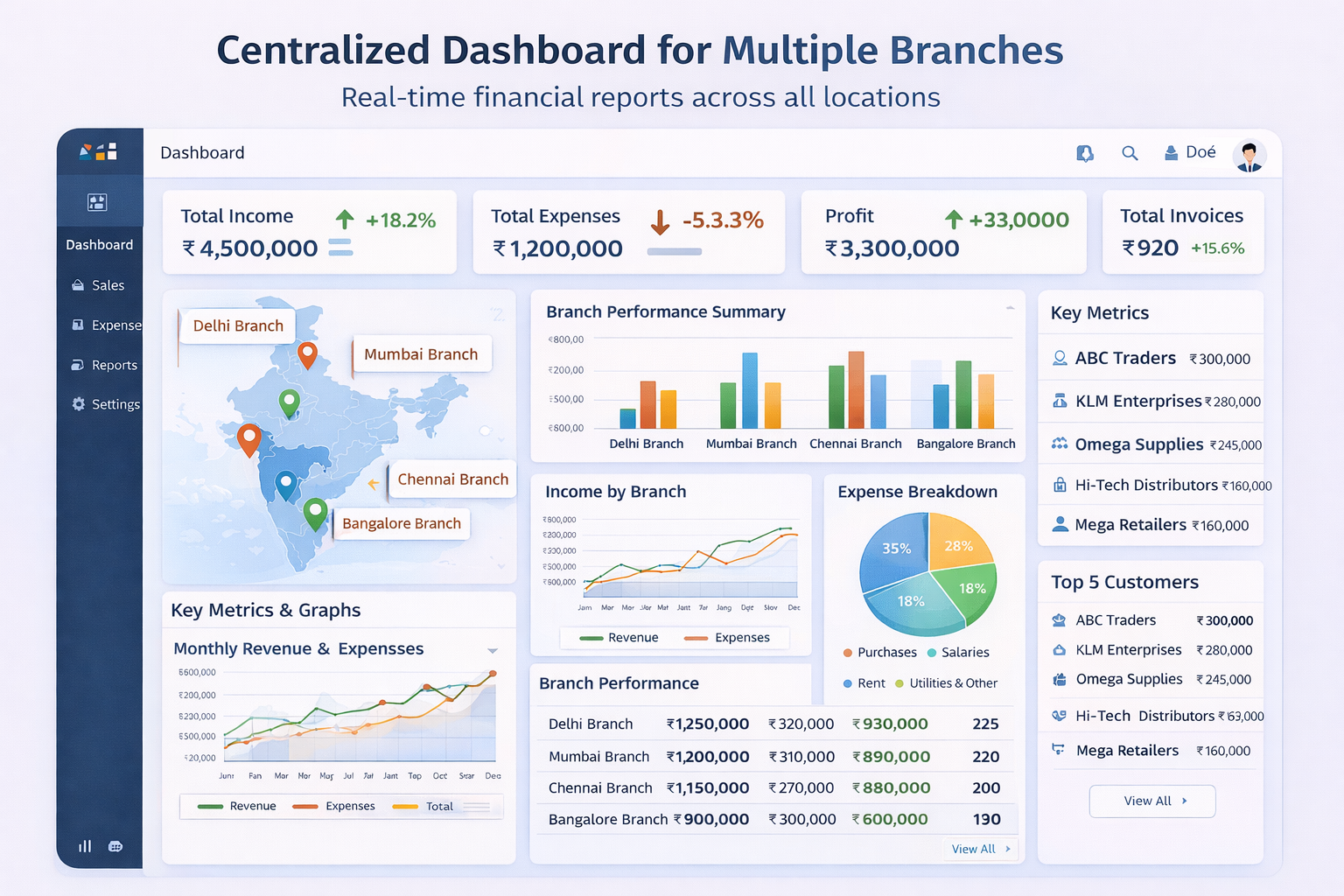
Pain Points:
Businesses with multiple branches often struggle to gain visibility into the financial status of each location. Without centralized financial reporting, it becomes difficult to assess each branch's performance, track key metrics, or identify areas for improvement. This lack of transparency can lead to confusion, delays in decision-making, and missed optimization opportunities.
Solution:
Multi-user billing software centralizes all financial data in a single, accessible location. This allows business leaders to gain a clear, real-time view of the financial situation across all branches. With accurate, up-to-date financial reports available at any time, managers can make informed decisions and identify potential issues before they become significant problems.
- Example: A clothing retailer with stores in different cities struggles to understand each location's financial health. By using multi-user billing software, they can instantly access consolidated financial reports that provide insights into each store's performance, helping them make informed decisions about inventory, staffing, and expansion.
Compliance and Regulatory Concerns
![]image7
Pain Points:
Operating in multiple regions often means dealing with varying tax laws, such as GST in India. For businesses with several branches, ensuring each location complies with local tax regulations can be a daunting task.
Failing to comply with these laws can result in costly penalties, audits, and legal trouble. Additionally, keeping track of ever-changing tax rules across different regions requires constant updates and attention.
Solution:
Automated billing software ensures that all branches comply with relevant tax regulations, including GST. With built-in tax calculation and reporting features, businesses can easily generate tax-compliant invoices without the risk of human error.
The software automatically updates itself with the latest tax rates, ensuring that all invoices are accurate and comply with local laws, thereby reducing the risk of non-compliance.
- Example: A company with branches in multiple states needs to generate invoices with different GST rates based on each state’s tax law. Using multi-user billing software, they can automate GST calculations, ensuring each invoice complies with the latest rules in every state, thereby avoiding penalties or legal issues.
Why You Need the Best Billing Software for Multi-Branch Firms
Many businesses underestimate the hidden costs associated with manual billing. These include time spent on data entry, errors that lead to costly corrections, and delays in financial reporting. Multi-user billing software provides a significant ROI by automating tasks, improving accuracy, and accelerating reporting.
Top Features to Look For in the Best Billing Software
When selecting multi-user billing software, businesses should prioritize:
-
Multi-Branch Compatibility: Ensure the software can scale with your business as you expand to new locations.
-
Integration with Accounting Systems: Choose software that integrates with your existing accounting or ERP systems to streamline operations.
-
Customizable Billing & Invoicing Options: Look for software that offers flexible invoicing to accommodate different services or regions.
-
Support for Tax Laws (GST, etc.): The software should automatically update with the latest tax regulations to ensure compliance.
Cheapest vs. Best Billing Software
While cost is an important factor, businesses must consider the long-term benefits of a more robust solution. “Cheapest billing software” may cut costs upfront, but it often lacks the features or support needed to grow with your business. The best billing software for multi-branch firms will not only save time but also improve efficiency and accuracy in the long run.
Real-Life Example
Consider the case of XYZ Corp., a mid-sized firm with several branches across India. Before adopting multi-user billing software, they experienced consistent invoicing delays and struggled with reconciliation. After integrating automated billing software, they saw a 40% reduction in processing time and a significant decrease in errors. The software enabled them to consolidate all financial data in one place, making reporting faster and more accurate.
The Best Multi-User Billing Software Options in India
The best billing software combines ease of use, powerful features, and scalability. It should simplify operations, reduce human error, and allow businesses to stay compliant with local tax laws. Integration with other business systems is also crucial for seamless operation.
Why Giddh Stands Out
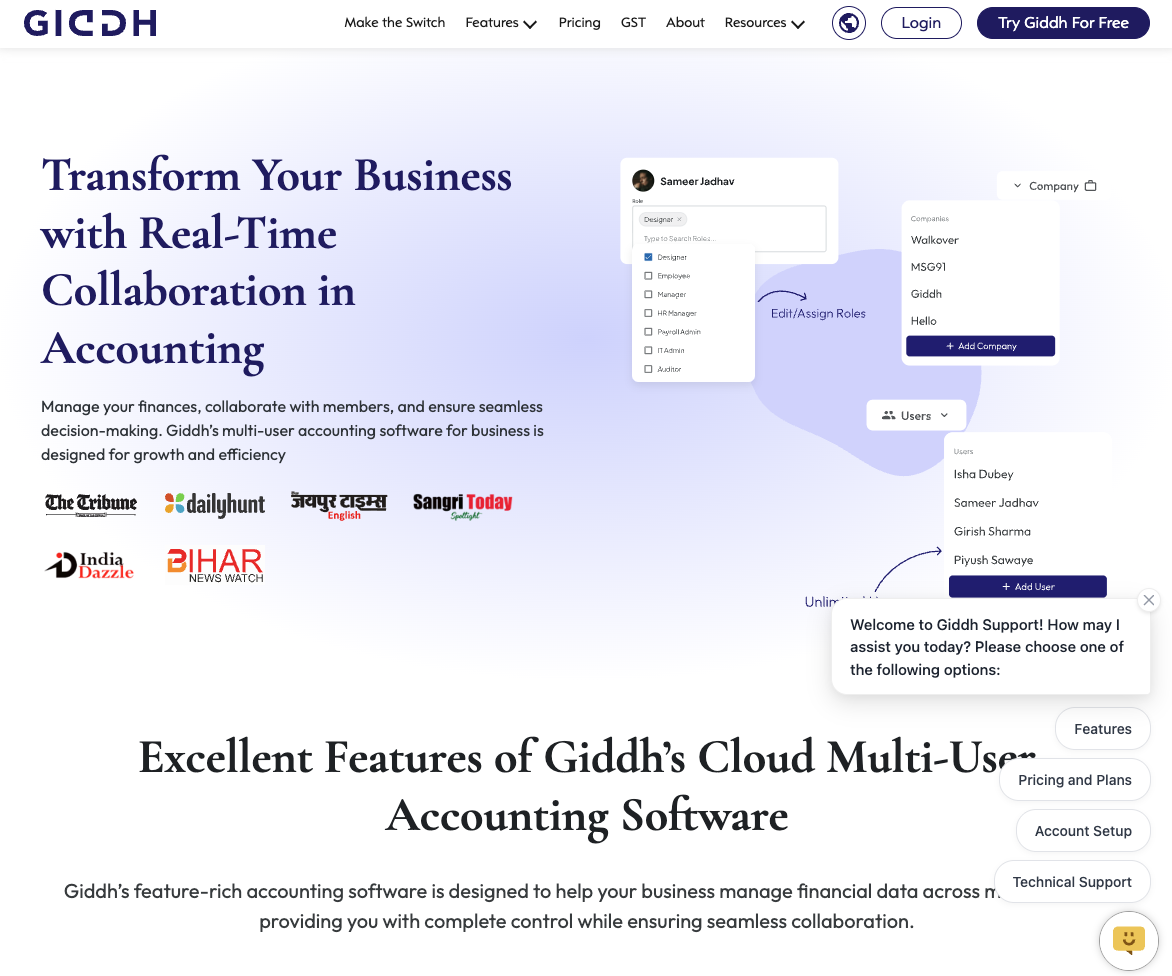
Giddh stands out as one of the leading multi-user billing software solutions for India’s growing businesses. Here’s why:
-
Automated Financial Reporting: Reduces manual errors and streamlines financial reporting.
-
GST-Compliant Billing: Ensures GST tax compliance with minimal effort.
-
User-Friendly Interface: Designed to be intuitive for teams at all levels of tech experience.
-
Multi-Branch and Multi-User Access: Supports businesses with operations across locations.
-
Seamless Integration: Easily integrates with existing systems.

Conclusion
Choosing the right multi-user billing software for your multi-branch firm can significantly improve efficiency, reduce errors, and streamline financial reporting. With the right solution, your business can scale without worrying about complex manual processes. Embrace automation and take control of your financial operations.
See how automated billing works in practice – book a free demo.
FAQ
What are the key benefits of multi-user billing software?
Multi-user billing software automates billing processes, ensures accuracy, saves time, and provides real-time financial insights, which are crucial for businesses with multiple branches.
Can multi-user billing software handle GST compliance?
Yes, the best billing software ensures seamless GST compliance by automatically calculating taxes, reducing the risk of manual errors.
Is multi-user billing software scalable for growing businesses?
Absolutely. Multi-user billing software is designed to grow with your business, supporting multiple branches and users as your company expands.
How do I choose the right multi-user billing software?
Look for software with multi-branch compatibility, integration with accounting systems, customizable invoicing, and support for tax compliance (such as GST).
Is Giddh the best option for multi-branch firms?
Yes, Giddh offers comprehensive features like automated financial reporting, multi-branch support, GST-compliant billing, and easy integration, making it an excellent choice for growing businesses.
 Download
  Download