Optimize Billing with Enterprise Invoicing Software and ERP Integration
In 2025, research found that businesses lose up to 10% of annual revenue due to inefficiencies in manual invoicing and outdated software. As enterprises scale, relying on disconnected systems for invoicing and financial reporting becomes increasingly problematic.
This disconnect leads to errors, delayed payments, and a lack of real-time financial visibility—problems that can cost businesses both time and money.
Can your organization afford to lose 10% of its annual revenue due to outdated invoicing systems? Transitioning from manual, error-prone systems to automated invoicing integrated with ERP could be the difference between financial efficiency and costly mistakes.
So, how do you ensure you're using the best invoicing software to streamline these processes? In this blog, we’ll explore why integrating enterprise invoicing software with ERP systems is crucial for modern enterprises and how the right solutions can resolve key pain points.
Why ERP Integration is Crucial for Enterprise Invoicing
The solution to these challenges lies in the seamless integration of invoicing software with an ERP system. ERP (Enterprise Resource Planning) software helps businesses manage various aspects of their operations, such as inventory, payroll, procurement, and financials, all in one platform. However, invoicing remains a critical component that requires smooth synchronization between your invoicing software and ERP system.
Benefits of ERP Integration in Invoicing Systems:
-
Improved Accuracy: With an integrated system, invoicing data automatically syncs with the financial records, eliminating the need for manual data entry and reducing the chance of human error.
-
Faster Processing: Automation speeds up invoicing and payment processing, allowing businesses to reduce delays and streamline cash flow management.
-
Better Visibility: With real-time updates, decision-makers can access comprehensive financial data, enabling more informed decisions and improving strategic forecasting.
-
Increased Transparency: Having all invoicing data connected to your ERP ensures that all stakeholders can view consistent financial information, improving transparency across teams and departments.
The right integration helps eliminate data discrepancies, offering businesses greater control over financial workflows, thus reducing time spent on manual entry and allowing for better forecasting and reporting.
Key Features of the Best Enterprise Invoicing Software

When evaluating e invoicing software solutions for your enterprise, it’s essential to ensure that the software aligns with your specific business goals and integrates smoothly with your existing ERP system. In this section, we’ll break down the key features to look for in the best enterprise invoicing software.
Automation of Invoice Creation and Payments
-
Automated invoicing based on sales orders, contracts, or services provided.
-
Manual invoicing is prone to human error, resulting in discrepancies and delays. Automated invoicing ensures that every invoice is generated accurately and sent on time, significantly reducing the chances of mistakes.
-
Added Benefit:
-
Time Savings: Automation cuts down on repetitive tasks, allowing your finance team to focus on more strategic work.
-
Payment Reminders & Overdue Notices: Automated payment reminders and overdue notifications help ensure timely payments, improving your business’s cash flow and reducing late payment issues.
-
The automation of both invoices and payment tracking is a game-changer for businesses, reducing the time and effort spent on manual processes, improving accuracy, and speeding up invoicing cycles.
Real-Time Integration with ERP
-
Seamless integration between your invoicing software and ERP system for automatic data syncing.
-
Real-time integration ensures that all financial data in your invoicing software is consistent with your ERP, providing a single source of truth. This eliminates discrepancies between invoicing records and financial data, which can lead to reporting issues or errors.
-
Added Benefit:
-
Instant Updates: With real-time data updates, businesses can have an accurate, up-to-date picture of their financial position at all times, helping management make faster, more informed decisions.
-
Reduced Manual Data Entry: Data syncing across systems reduces the need for double data entry, preventing errors and saving time.
-
By integrating invoicing and ERP systems, companies can streamline financial operations, allowing for more precise reporting and better decision-making.
Customizable Reporting & Analytics
-
Tailored reports on invoicing performance, outstanding payments, and other important financial metrics.
-
CFOs and finance teams require actionable insights into the business’s financial health. Customizable reporting allows businesses to create the reports they need, without the hassle of adjusting or filtering through irrelevant data.
-
Added Benefit:
-
Trend Analysis: By tracking invoicing trends, businesses can better predict future cash flow and identify potential financial issues before they arise.
-
Improved Forecasting: Analytics tools provide detailed insights into invoicing performance and payment behaviors, helping businesses forecast more accurately and plan for growth.
-
Customizable reporting and powerful analytics give businesses the tools to make data-driven decisions, enabling them to take proactive measures in improving financial performance.
Security & Compliance
-
Built-in encryption and compliance with industry standards and regulations (e.g., GDPR, SOX).
-
Financial data is highly sensitive and must be protected. Invoicing software must meet high security standards to prevent data breaches and ensure compliance with data protection regulations.
-
Added Benefit:
-
Data Protection: Strong encryption and secure data storage ensure that financial information is protected from unauthorized access.
-
Regulatory Compliance: Adherence to local and global regulations ensures that businesses avoid costly fines and penalties while protecting customer trust.
-
Security and compliance are non-negotiable when dealing with invoicing and payment data. Robust security features are essential for safeguarding your business and maintaining legal compliance.
Scalability
-
The ability to scale the invoicing software as your business grows.
-
As businesses expand, their invoicing needs grow in complexity. The best invoicing software should be able to handle increased transaction volumes, additional users, and more complex workflows without compromising performance.
-
Added Benefit:
-
Adaptability: Scalable invoicing software evolves with your business, eliminating the need for frequent upgrades or switching to a different system as your business grows.
-
Cost Efficiency: Instead of purchasing new software or systems as the business grows, scalable solutions allow businesses to adjust and expand their current software without incurring excessive costs.
-
Scalability ensures that businesses don’t outgrow their invoicing solution, making it a cost-effective option that will serve them long-term as their operations expand.
Why Giddh Stands Out in the Enterprise Invoicing Software Market
When it comes to choosing the best invoicing software, it’s important to pick a solution that not only meets the functional needs of your business but also integrates seamlessly with your existing ERP system. Giddh is a powerful solution that excels in automating invoicing, payment tracking, and financial reporting—all while syncing seamlessly with your ERP system.
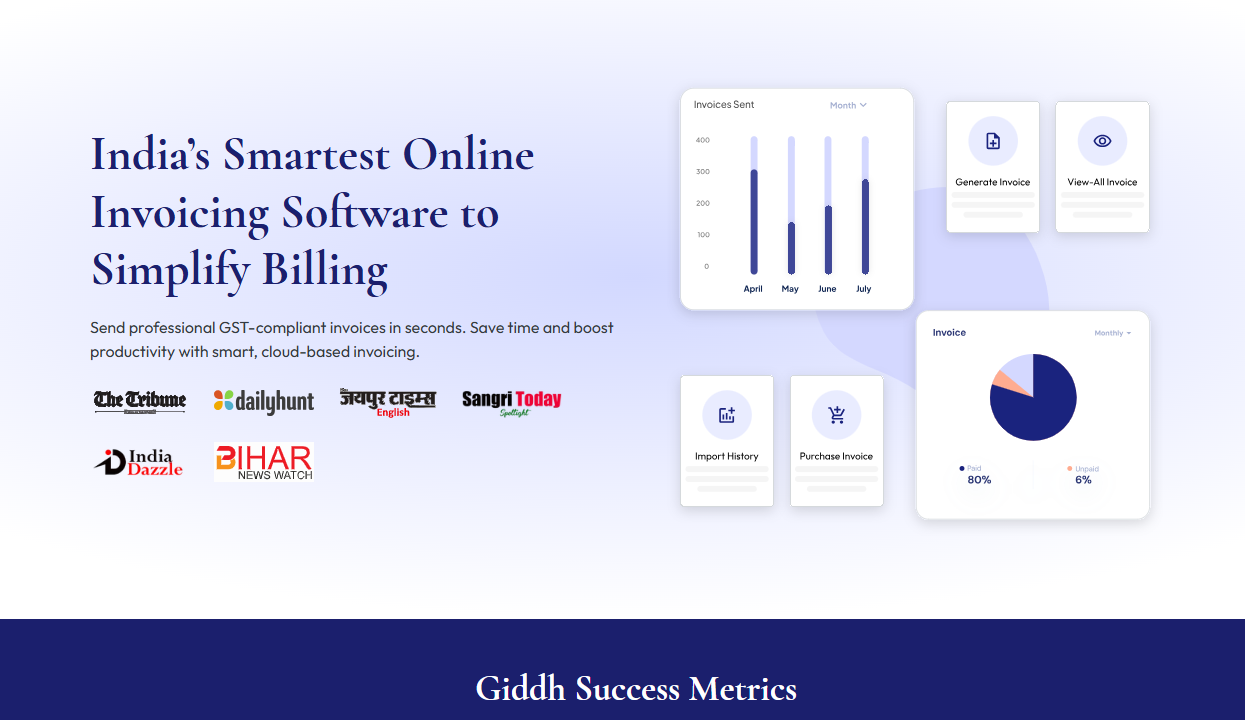
Key Advantages of Giddh’s ERP Integration:
-
Seamless ERP Syncing: Giddh integrates with a wide range of ERP systems, ensuring that your invoicing and financial data are always in sync.
-
Automated Invoice Processing: With Giddh, businesses can fully automate their invoicing process, from creating invoices to tracking payments. This reduces the workload for your finance team and minimizes errors.
-
Real-Time Reporting and Insights: Giddh offers customizable reports, real-time dashboards, and comprehensive analytics to provide CFOs and decision-makers with actionable financial data.
-
User-Friendly Interface: Giddh is intuitive and easy to use, making it accessible to teams across the organization without the need for extensive training.
-
Security and Compliance: Giddh ensures that your financial data is protected by industry-leading security measures, including encryption and regular audits to maintain compliance with local data protection laws.
If you're looking for a comprehensive solution that will enhance your invoicing process and integrate flawlessly with your ERP system, Giddh’s enterprise invoicing software could be the ideal fit for your business.
The Challenges of Manual Invoicing and Disjointed Systems
Manual invoicing processes and disjointed financial systems are among the top pain points for mid-to-large-sized businesses, especially those in industries like manufacturing, retail, and services. CFOs, finance managers, and IT decision-makers often face these hurdles when trying to maintain financial accuracy, efficiency, and real-time visibility.
Common Issues with Manual Invoicing:
-
Data Entry Errors: Manual invoicing introduces human errors, leading to discrepancies between what is billed and what’s recorded in the financial system.
-
Time-Consuming Processes: Manually creating and tracking invoices takes valuable time away from more strategic tasks, reducing overall productivity.
-
Delayed Payments: If invoices aren’t processed quickly, businesses can experience cash flow issues, making it difficult to stay afloat.
Despite the advancements in financial software, many enterprises still use outdated systems or rely on software that isn’t integrated with their ERP, leading to data silos and poor financial reporting. This creates bottlenecks and inefficiencies that prevent finance teams from making informed decisions.
Conclusion: Make the Shift to Integrated Enterprise Invoicing Software
As businesses continue to scale, the need for efficient, error-free invoicing becomes ever more crucial. ERP-integrated invoicing software not only streamlines the invoicing process but also ensures data consistency, improves accuracy, and offers real-time financial visibility—key benefits for any mid-to-large-sized enterprise.
Giddh stands out as an enterprise invoicing solution that offers seamless ERP integration, automated invoicing, and advanced reporting features that businesses need to stay ahead. By adopting a solution like Giddh, enterprises can drastically reduce the time and errors associated with manual invoicing, ultimately improving cash flow and financial decision-making.
Ready to transform your invoicing process? Request a demo today to see how Giddh can help streamline your financial workflows and integrate seamlessly with your ERP system.
FAQ Section
1. What is enterprise invoicing software?
Enterprise invoicing software automates the creation, management, and tracking of invoices for large businesses. It ensures accuracy, streamlines payment collection, and integrates with ERP systems for seamless financial workflows.
2. Why is ERP integration important for invoicing?
ERP integration ensures that invoicing data is synchronized across the entire financial system in real time. This reduces manual errors, improves reporting accuracy, and provides better visibility into cash flow and financial performance.
3. How does Giddh integrate with ERP systems?
Giddh seamlessly integrates with multiple ERP systems, ensuring that invoicing, payment tracking, and financial reporting are all aligned with real-time data. This integration reduces discrepancies and enhances efficiency across departments.
4. What features should I look for in the best invoicing software?
Key features include automation of invoicing and payment tracking, real-time integration with ERP, customizable reporting, security compliance, and scalability to meet the growing needs of the business.
5. How can Giddh improve my invoicing process?
Giddh improves invoicing by automating processes, reducing manual errors, enhancing payment tracking, and offering real-time insights. The seamless ERP integration ensures that financial data is accurate and up-to-date, improving overall efficiency.
 Download
  Download